
A low-bank home near Chelan, a steep South Shore property, a condo with shared beach access, and a remote cabin farther up the lake can all appear in a waterfront search. They don’t offer the same ownership rights, access, boating conditions, maintenance needs, or building options.
The view is usually what gets a buyer’s attention. The details determine whether the property will work.
When comparing waterfront homes, I separate the purchase into three parts: the house, the land, and the water access. Each needs its own review. Here are 12 questions to ask before making an offer.
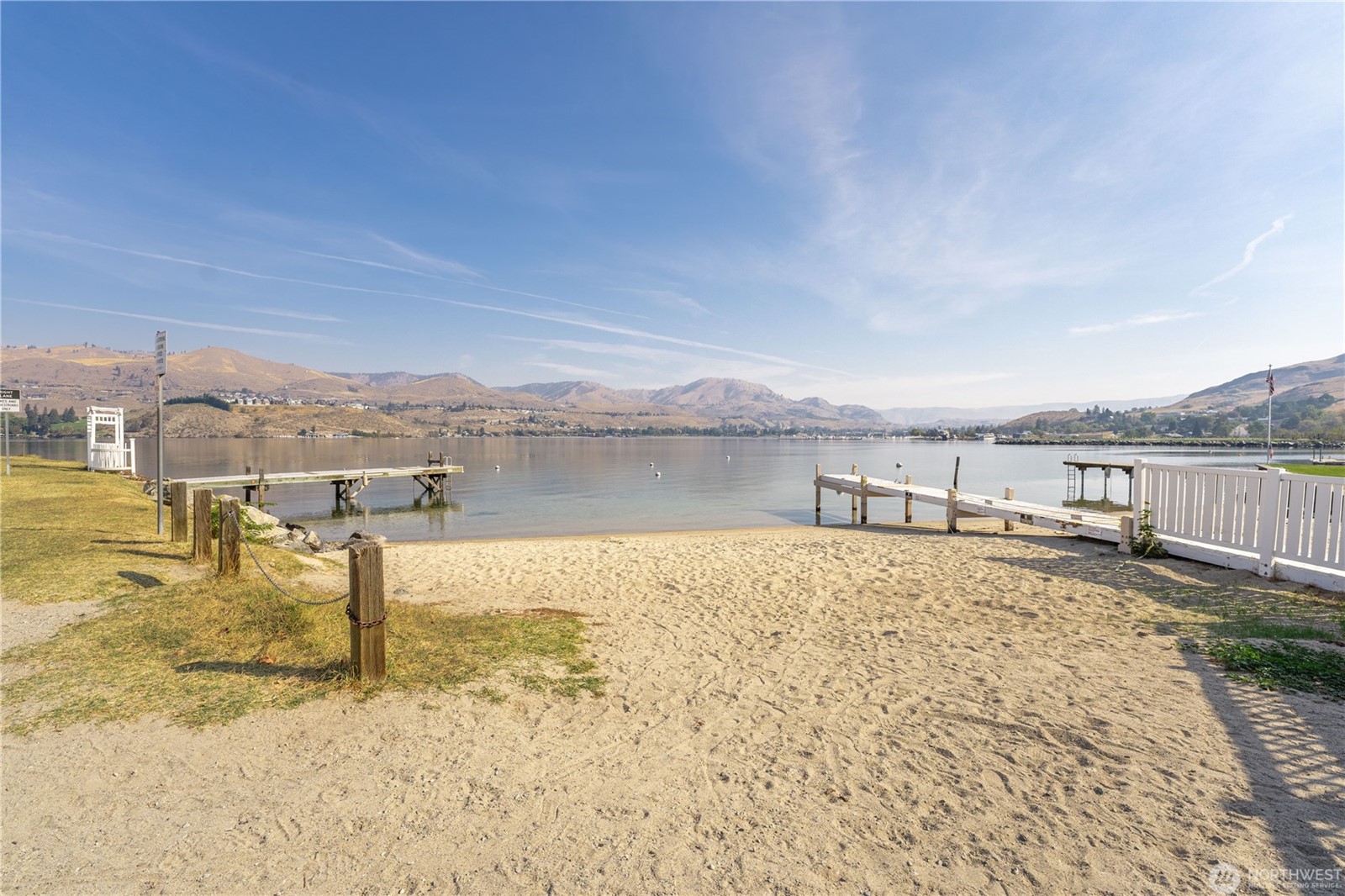
2. Were the dock, boat lift, buoy, stairs, and shoreline work approved?
Never assume a waterfront structure is legal because it has been there for years.
Ask for the permit history and final approvals for:
- Docks and floats
- Boat lifts
- Mooring buoys
- Retaining walls or bulkheads
- Shoreline stabilization
- Stairs, trams, and access paths
- Dredging or fill
- Significant vegetation removal near the shoreline
Chelan County’s shoreline guide says new development and expansions generally require shoreline review. A new dock requires a permit, while replacement of an existing dock may require an exemption. Vegetation clearing can also trigger review. See the county’s Shoreline Master Program User Guide.
Work in or near Washington waters may also require a Hydraulic Project Approval from the Washington Department of Fish and Wildlife. Depending on the property and the proposed work, authorization from the U.S. Army Corps of Engineers, Washington Department of Natural Resources, or another agency may apply.
Request copies of the approvals rather than accepting “the seller believes it was permitted.” Compare the approved plans with what is actually on the property.
3. Will the dock and moorage work at different lake levels?
Lake Chelan’s elevation changes during the year. That affects water depth, swimming access, boat lifts, fixed docks, ramps, and the distance between the shoreline and the water.
Chelan County PUD manages the lake as part of the Lake Chelan Hydroelectric Project. The PUD expects the lake to remain between approximately 1,084 and 1,100 feet above sea level during most years, but weather, runoff, project operations, erosion control, and other license requirements can move the lake outside its forecasted range. Current conditions are published on the Chelan PUD lake-level page.
Before buying:
- Check the depth at the dock
- Compare the dock design with seasonal lake levels
- Confirm that the lift fits the intended boat
- Look for low-water marks on pilings and shoreline structures
- Ask for photos taken in spring and fall
- Check whether a nearby boat launch remains usable when the lake is lower
If boating is central to the purchase, inspect the waterfront under something other than ideal midsummer conditions whenever possible.
A dock that works well in August may have limited water beneath it in early spring. A lift may be positioned too high or too shallow for the buyer’s boat during part of the year.
4. Does the shoreline fit how you want to use the lake?
Waterfront footage alone doesn’t tell you whether the shoreline works for swimming, boating, young children, older guests, or quiet outdoor use.
Look at the property from the water if possible. Consider:
- Water depth and how quickly it changes
- Rock, gravel, sand, vegetation, or a sharp drop at the shoreline
- Low-bank versus steep-bank access
- The number and condition of stairs
- Space for sitting near the water
- Afternoon wind and wave exposure
- Boat traffic and wakes
- Sun exposure at different times of day
- Privacy from neighboring docks and homes
- Debris accumulation after storms or spring runoff
A steep property may offer broad views and deep-water moorage but require a long staircase. A low-bank property may provide easier swimming and access but less privacy. Neither is automatically better. The right choice depends on how you expect to use the property.
Visit more than once if the purchase is serious. A calm weekday morning and a busy summer afternoon can give you very different impressions.
5. What condition are the dock, lift, bulkhead, and stairs in?
A standard home inspection may not provide a complete evaluation of waterfront structures.
Ask an appropriate contractor or engineer to examine the components that matter for the property. That may include pilings, framing, decking, flotation, anchors, electrical connections, retaining walls, drainage, shoreline stabilization, stairs, railings, and boat-lift equipment.
Find out:
- When each structure was built or last repaired
- Who completed the work
- Whether permits were obtained
- Whether warranties can be transferred
- What maintenance has been performed
- What repairs are expected during the next several years
- Whether replacement would have to meet different rules than the existing structure
Get actual estimates for visible problems. “The dock will need work eventually” is too vague to use in a buying decision.
6. What do the slope, flood, erosion, and wildfire records show?
Waterfront does not remove the other physical risks found around Lake Chelan.
A property can be affected by steep slopes, rockfall, erosion, drainage problems, wildfire exposure, or limited emergency access. Shoreline and hillside work can also require technical reports before permits are issued.
Start with the county’s critical-area information, the Washington Geological Survey’s Geologic Information Portal, and the official FEMA Flood Map Service Center. Then compare those maps with conditions at the property.
A mapped hazard does not automatically make a property unsuitable. Likewise, the absence of a map designation does not guarantee that a site is free from risk. If you see retaining walls, drainage systems, slope movement, large cracks, erosion, or prior stabilization work, bring in a qualified professional.
Request geotechnical reports, drainage plans, engineering records, insurance claims, and permits for previous slope or shoreline work.
7. Can you remodel, expand, or rebuild what is there?
An existing home may sit closer to the shoreline than current rules would allow for new construction. That can affect additions, decks, garages, pools, guest spaces, and reconstruction after major damage.
Under Chelan County’s shoreline rules, a legally established nonconforming residence can generally continue to be used, maintained, repaired, or remodeled within its existing footprint. Expansion toward the water may be restricted, and mitigation or other conditions can apply. City rules may differ.
Before buying, ask the correct planning department:
- Is the home legally established?
- Are all existing additions and decks permitted?
- Is the structure considered nonconforming?
- Can it be expanded, and in which direction?
- What shoreline buffer applies?
- Could a detached garage, ADU, pool, or larger deck be allowed?
- What could be rebuilt after a fire or other major loss?
- Would the proposed work require shoreline, building, critical-area, or geotechnical review?
If future construction affects your decision, get a property-specific answer in writing during the feasibility period. A contractor’s opinion or a neighbor’s project is not enough.
8. How are drinking water and wastewater handled?
Some Lake Chelan waterfront homes are connected to public utilities. Others rely on septic systems, community water systems, private wells, shared lines, pumps, or other approved arrangements.
For a septic property, request:
- The original permit and approved design
- The as-built drawing
- Approved bedroom or occupancy capacity
- Inspection, pumping, maintenance, and repair records
- The location of the tank, drainfield, and reserve area
- Any agreements for a shared system
- Records of failures, alarms, or seasonal problems
The Chelan-Douglas Health District maintains the local on-site septic program. Washington’s updated rules require property-transfer septic inspections beginning February 1, 2027, although a local health officer may waive that inspection when a qualifying recent inspection is already on file. Current requirements should be confirmed when the property is purchased. Washington Department of Health rule information provides the statewide timeline.
For water, identify the supplier and obtain recent quality information. If the property uses a private well, the owner is responsible for testing it. The Washington State Department of Health recommends checking local requirements and using appropriate water testing.
Also verify easements for shared wells, pumps, water lines, sewer lines, and maintenance access.
9. Can you insure the property at a reasonable cost?
Do not wait until the final days before closing to investigate insurance.
Ask an insurance professional to quote the specific property early in the transaction. The carrier may consider wildfire exposure, roof condition, vegetation, road access, distance from fire services, slope, prior claims, rental use, and the cost of rebuilding in a shoreline location.
Confirm whether the proposed policy covers:
- The residence and detached structures
- Dock damage
- Boat-lift equipment
- Retaining walls and stairs
- Wildfire
- Water backup
- Debris removal
- Loss of use
- Short-term rental activity, if planned
- Replacement cost rather than depreciated value
The Washington Office of the Insurance Commissioner says most standard home policies cover wildfire as part of fire coverage. Flood damage is usually excluded and requires separate flood insurance. Landslide and earth-movement coverage can also be limited or excluded. Review the actual policy rather than assuming “waterfront insurance” covers every water- or slope-related loss. See the state’s guidance on wildfire insurance and flood insurance.
10. Is the property practical to reach and maintain year-round?
A summer drive to a waterfront home may not show what access is like during snow, wildfire, road construction, or a power outage.
Confirm whether the road is public, private, primitive, or maintained through an association. Review recorded access and road-maintenance agreements. Ask who handles snow removal, grading, drainage, fallen trees, gates, and emergency repairs.
Chelan County notes that private and primitive roads do not receive county snowplowing. Even lower-priority county roads may wait longer for service during storms. The county publishes road and snow-removal information.
Also investigate:
- Fire and ambulance access
- Driveway grade and turnaround space
- Parking for owners, guests, and trailers
- Power reliability and backup-power options
- Internet and cell service at the home
- Propane delivery, garbage service, and package delivery
- Winterization of irrigation, pumps, and exterior plumbing
- Whether any part of the property is accessible only by boat
These details can determine whether the home works as a primary residence, occasional retreat, or rental.
11. What will the property cost to own beyond the mortgage?
Waterfront structures and steep-site improvements add systems that an ordinary home may not have.
Ask the seller for at least two years of actual expenses when available, including:
- Property taxes
- Home, flood, and specialty insurance
- HOA or condominium dues
- Dock, lift, buoy, and marina fees
- Septic service
- Private road and snow-removal costs
- Landscaping and irrigation
- Pest control
- Shoreline and retaining-wall maintenance
- Utilities and winterization
- Property management
- Boat storage and launch fees
For a condominium or HOA property, read the budget, reserve study, meeting minutes, rules, insurance documents, and history of special assessments. Determine who owns the dock, who pays for repairs, whether slips are assigned, and whether the association has enough reserves for future waterfront work.
A low monthly HOA fee is not necessarily a bargain if the association has an aging dock and little money set aside to replace it.
12. Can you legally use the property the way you intend?
Do not assume that a home can be used as a vacation rental because the seller currently advertises it online.
The rules depend on whether the property is inside the City of Chelan, in Manson, or elsewhere in unincorporated Chelan County. Zoning, permit availability, occupancy limits, parking, septic capacity, HOA restrictions, and transfer rules can all affect rental use.
Chelan County states that an existing short-term rental permit may or may not transfer to a buyer. When transfer is allowed, the request must be made within 30 calendar days of closing. The City of Chelan limits short-term rentals to specific zones and currently requires an ownership transfer form within 60 days of closing.
Before relying on rental income, obtain written confirmation of:
- The governing jurisdiction
- Whether short-term rentals are allowed in that zone
- The property’s current permit status
- Whether the permit can transfer
- Required transfer deadlines
- Approved occupancy
- Parking and septic limitations
- HOA or condominium restrictions
- Insurance requirements
- Any unresolved violations
Past rental history is useful financial information. It is not proof that future operation will be legal.
Documents to request before closing
For a Lake Chelan waterfront purchase, the property file may matter as much as the physical inspection. Depending on the home, request:
- Preliminary title report and exception documents
- Recorded plat and available surveys
- Easements and road-maintenance agreements
- HOA or condominium documents
- Dock, lift, buoy, bulkhead, stair, and shoreline permits
- Building permits and final approvals
- Septic permit, as-built drawing, and service records
- Water-system information and recent test results
- Geotechnical, drainage, and engineering reports
- Insurance quotes and available claim history
- Short-term rental permits and correspondence
- Invoices, warranties, and repair records for waterfront structures
- Photographs showing the shoreline at different lake levels
No single checklist can answer every waterfront question. The property’s location, jurisdiction, shoreline, utilities, and intended use determine which investigations deserve the most attention.
A careful waterfront purchase starts before the offer
Lake Chelan waterfront can be an exceptional place to own a home, but the word waterfront doesn’t tell you enough. Buyers need to understand the rights, restrictions, physical conditions, seasonal access, and costs attached to the specific property.
If you are comparing Lake Chelan waterfront homes, I can help you identify the questions to ask, collect the available property records, and bring in the right local professionals when an issue requires legal, engineering, permitting, insurance, or septic expertise.
Call or text Arturo Zavala at 509-630-6365 to discuss your Lake Chelan waterfront search.
This article provides general real estate information and is not legal, engineering, environmental, insurance, tax, or permitting advice. Regulations and property conditions can change. Buyers should verify all information with the appropriate agencies and qualified professionals.


Contact
Arturo Zavala
509.630.6365
arturozavala@windermere.com
Address
Windermere RE/ Lake Chelan
115 East Woodin Ave,
Chelan, WA 98816


© 2025 Windermere Real Estate
